
The Maasai People of Kenya: History, Culture, and Misconceptions
The Maasai people are among the most recognizable and culturally distinctive communities in East Africa. Known for their vibrant attire, pastoral lifestyle, and deep-rooted traditions, they have long captured global attention. Yet beyond the striking imagery often portrayed in media lies a rich history, complex social structure, and evolving modern identity that deserves deeper understanding.
This article explores the origins, traditions, historical significance, and common myths surrounding the Maasai people of Kenya.
Origins and Historical Background
The Maasai are a Nilotic ethnic group believed to have migrated from the Nile Valley region (present-day South Sudan) centuries ago. Their movement southward into Kenya and northern Tanzania is estimated to have occurred between the 15th and 18th centuries.
As they migrated, the Maasai established themselves as a dominant pastoral community in the Great Rift Valley. Their expansion was not merely geographic but also cultural, as they developed a strong identity centered on cattle herding, social organization, and warrior traditions.
Pre-Colonial Influence
Before colonial rule, the Maasai were among the most powerful groups in East Africa. They controlled vast grazing lands and were known for their military prowess. Neighboring communities often viewed them with a mix of respect and fear due to their reputation as skilled warriors.
Their society was organized into age sets, a system that structured roles and responsibilities across generations. Young men became warriors, tasked with protecting the community and livestock, while elders held decision-making authority.
Impact of Colonialism
The arrival of European colonial powers in the late 19th century significantly altered Maasai life. British colonial authorities in Kenya displaced many Maasai communities from their ancestral lands to make way for settler agriculture and wildlife conservation areas.
This loss of land disrupted traditional grazing patterns and weakened their economic independence. Despite these challenges, the Maasai maintained much of their cultural identity and adapted to changing circumstances.
Cultural Identity and Traditions
Pastoral Lifestyle
Cattle are central to Maasai life. They are not only a source of food providing milk, meat, and occasionally blood but also a symbol of wealth, status, and social connection. Ownership of cattle plays a key role in marriage arrangements and community relationships.
The Maasai traditionally practice semi-nomadic pastoralism, moving their herds in search of water and pasture depending on seasonal conditions.
Dress and Adornment
The Maasai are widely recognized for their distinctive clothing, particularly the brightly colored shúkà (cloth wraps), often in red. Red is culturally significant, symbolizing bravery, strength, and unity.
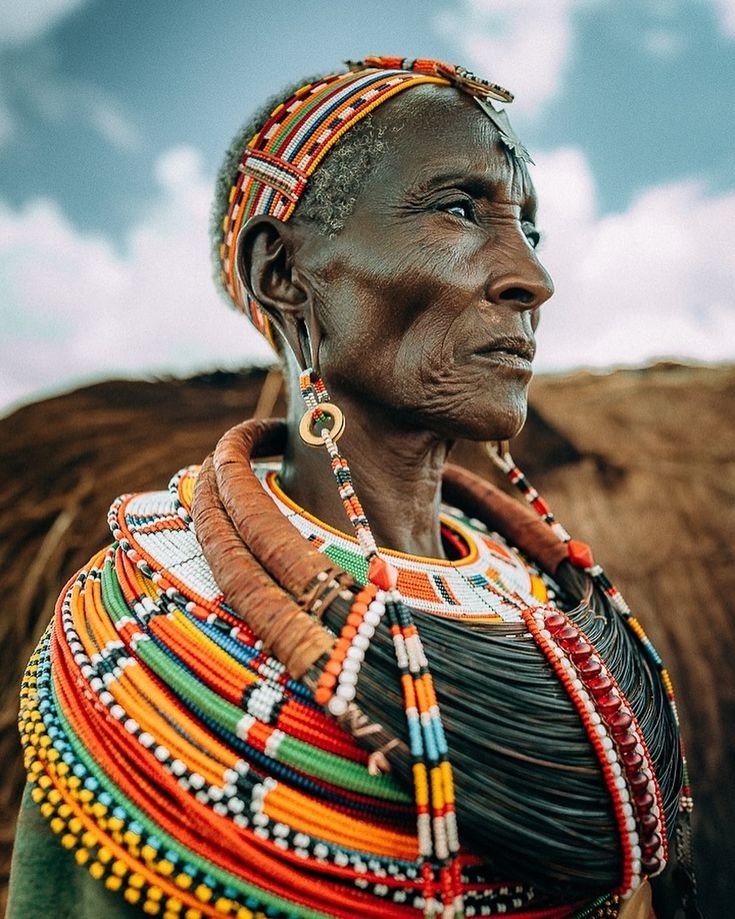
Beadwork is another important aspect of Maasai culture. Jewelry is handcrafted and carries meaning related to age, marital status, and social position. Both men and women participate in beadwork, though women are especially known for their intricate designs.
Social Structure
Maasai society is organized around age sets and clans. Life progresses through clearly defined stages:
-
Childhood
-
Warriorhood
-
Elderhood
Each stage comes with specific duties and expectations. This system fosters strong community bonds and a sense of shared responsibility.
Ceremonies and Rites of Passage
Rituals play a vital role in Maasai culture. Key ceremonies include:
-
Emuratare (circumcision): Marks the transition from boyhood to warriorhood.
-
Eunoto: A ceremony signifying the transition from warrior to elder.
-
Marriage ceremonies: Often involve elaborate traditions and negotiations centered around cattle.
These rites are not merely symbolic but serve as foundational pillars of Maasai identity.
Spiritual Beliefs
The Maasai traditionally believe in a single deity known as Enkai (or Engai), who is associated with both benevolence and wrath. Enkai is believed to control rain, fertility, and overall well-being.
Nature is deeply intertwined with their spirituality. Rain, drought, and environmental changes are often interpreted as expressions of divine will.
Historical Significance
The Maasai hold an important place in the history of East Africa for several reasons:
Guardians of the Rift Valley
Their long-standing presence in the Rift Valley has contributed to the preservation of ecosystems through sustainable grazing practices. Unlike intensive agriculture, their pastoral lifestyle historically allowed land to regenerate.
Resistance and Adaptation
While many African communities were heavily transformed or assimilated during colonial rule, the Maasai retained a strong cultural identity. Their ability to adapt while preserving core traditions has made them a symbol of cultural resilience.
Cultural Representation
The Maasai have become emblematic of African heritage in global media. While this visibility has brought attention and tourism, it has also led to oversimplifications and stereotypes.
Common Myths About the Maasai
Despite their global recognition, many misconceptions persist about the Maasai. Let’s break down some of the most common myths:
Myth 1: The Maasai Are Completely Isolated from Modern Life
Reality:
While many Maasai maintain traditional practices, they are not isolated. Increasing numbers of Maasai people engage in formal education, business, and modern professions. Mobile phones, schools, and healthcare facilities are becoming more common in Maasai regions.
Myth 2: The Maasai Only Drink Blood and Milk
Reality:
Although milk and occasionally cattle blood are part of traditional diets, the Maasai also consume meat, grains, vegetables, and other foods especially today. Their diet has evolved over time due to environmental changes and interaction with other communities.
Myth 3: All Maasai Are Warriors
Reality:
Only young men in the warriorhood stage are warriors, and even then, their role is more about community protection than warfare. The majority of Maasai people are herders, elders, women managing households, or individuals engaged in various professions.
Myth 4: The Maasai Reject Education
Reality:
Historically, formal education was not a part of Maasai society, but this has changed significantly. Many families now prioritize schooling, and there are Maasai professionals in fields such as medicine, law, and education.
Myth 5: The Maasai Culture Is Static and Unchanging
Reality:
Like all cultures, Maasai traditions are dynamic. While they maintain core values, they continuously adapt to social, economic, and environmental changes.
The Maasai in the Modern World
Today, the Maasai face a range of challenges and opportunities:
-
Land pressure: Population growth and conservation policies limit grazing areas.
-
Climate change: Increased droughts affect livestock and livelihoods.
-
Education and empowerment: Expanding access to education is transforming future generations.
-
Tourism: Cultural tourism provides income but also raises concerns about authenticity and exploitation.
Many Maasai communities are actively balancing tradition with modernization seeking ways to preserve their heritage while improving living standards.
Conclusion
The Maasai people of Kenya represent a powerful blend of tradition, resilience, and adaptability. Their history reflects both strength and struggle, shaped by migration, colonial disruption, and modern transformation.
Understanding the Maasai requires moving beyond stereotypes and appreciating the depth of their culture, the complexity of their social systems, and their ongoing journey in a rapidly changing world.
By acknowledging both their past and present, we gain a richer perspective not only of the Maasai themselves but of the broader human experience of cultural identity and survival.

Comment (0)